
When content discovery on streaming video platforms is discussed, it’s usually in terms of how difficult or bad it is. The challenge in connecting viewers with content they want to watch, but may not think of themselves, is a deep-seated problem streamers have been struggling with since the very start of the streaming wars — and have seemingly gotten no closer to solving.
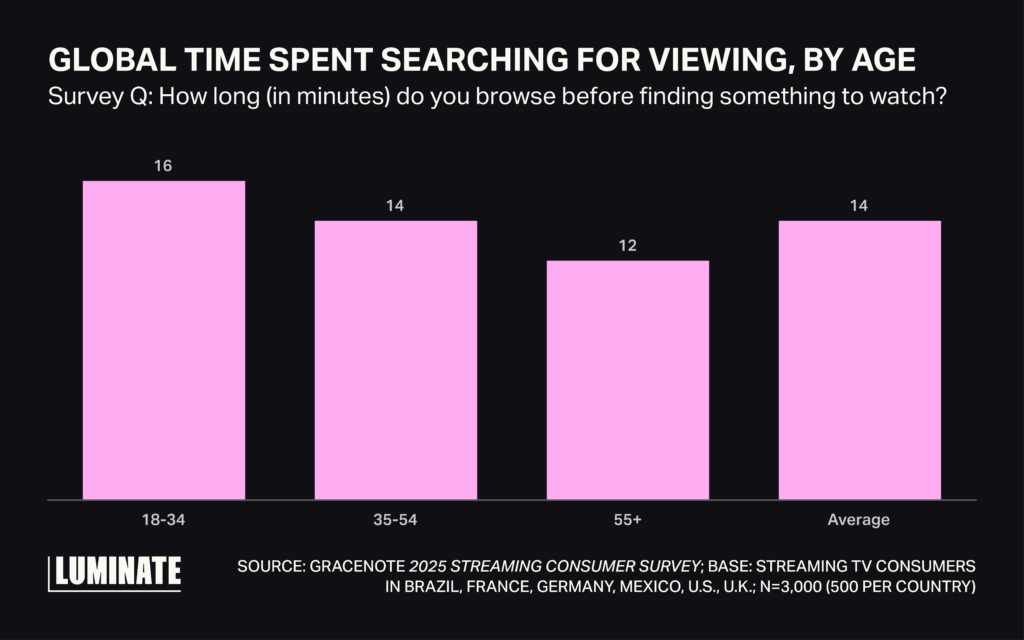
The latest State of Play consumer survey by Gracenote found global streaming users spend an average of 14 minutes looking for something to watch, up from the 11 minutes noted in a similar 2022 survey. In other words, despite the ever-growing ubiquity of video streaming during that time, as well as the significant contraction in new content being made available since 2022, the content discovery process has evidently only worsened.
Meanwhile, the rapid advancement of large language models (LLMs), which power today’s generative AI chatbots, seemed like a natural opportunity for new forms of discovery and consumer engagement. But as many AI users have found by now, the tech’s actual usefulness has not entirely lived up to the hype around it.
Another Gracenote study reported that an ungrounded LLM — that is, a model “without access to any data or knowledge that isn’t part of [its] training,” per the study — when tasked with answering questions about 2,600 popular movies and TV shows, hallucinated all metadata (summaries, cast, genre, etc.) for 506 titles, or nearly one in five.
Integrating AI into platforms’ discovery tools, then, is a significant challenge in and of itself, let alone designing new tools that utilize the tech. But that hasn’t stopped key players in the content space from beginning to develop such tools, which could present the industry’s most promising developments toward solving the content discovery conundrum.
For instance, Cineverse Technology Group, which develops solutions for streaming content management and distribution, has begun rolling out search tools aimed at identifying titles’ “emotional composition” scene by scene, an esoteric-sounding term that simply means the tone and mood across a film or show.
As Cineverse Chief Product Officer Tony Huidor explained at a recent StreamTV Show panel I moderated, “Our thesis was, when you’re at home with your family and want to watch a movie, the very first question that comes up is, ‘What are you in the mood for?’ So we spent the last three years building a dataset specifically about emotion. We were able to take AI-generated contextual data and extract the emotional understanding.”
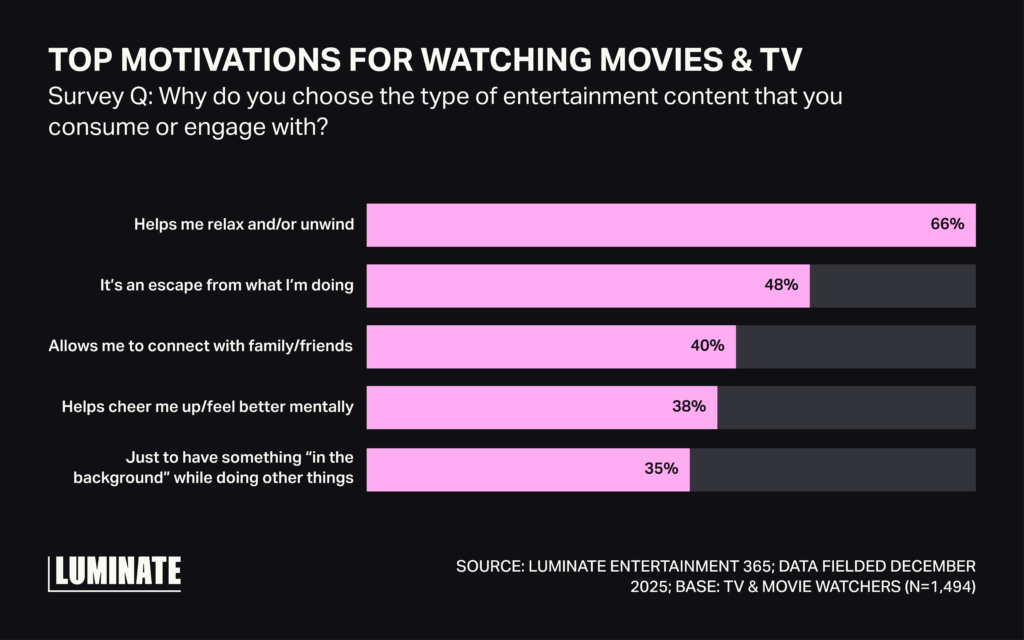
It’s an apt point; Luminate’s own consumer surveys have consistently shown that emotions are film and TV viewers’ most common motivation by far for choosing what to watch, with especially favored titles being those that help viewers unwind or escape their daily lives.
The most potentially powerful content discovery solutions, however, are those that can help target not only mood but context, as distributors are beginning to recognize.
“Hyper-personalization is something we really lean into — really understanding who are you as a person, what matters to you right now and the context around that,” said Sharon Kritzer, VP of Product, Discovery & AI at free streamer Tubi, during the StreamTV panel. “I work in front of a TV once my kids go to bed, and Tubi knows that, and it knows what kind of content I like to watch in the background while finishing my evening work.”
She added, “That takes time, but by starting to get those implicit and explicit signals — like, what did you dwell on longer? What preview did you watch longer? What elements and what metadata can we extrapolate from that? What are the moods within that? — then we can generate that collective experience for you.”
Of course, time is not on the side of these platforms, especially newer ones: “What we know is, usually within about three clicks of the remote or the keyboard, [viewers] are going to move on if they’re not getting a relevant result,” said Eric Carson, Managing Director of the Americas at Mediagenix, a content solutions software developer.
High stakes, to be sure, but such is life in the streaming game. With cutthroat competition from other SVODs and free streamers as well as the bottomless well of social video, any platform that cannot navigate the great content discovery problem risks bleeding itself of engagement.